Sourcing Flum Vape products from global suppliers requires more than comparing unit prices. It demands documented compliance, product verification, and responsible market selection. The World Health Organization’s Global Report on Trends in Tobacco Use 2000–2030 estimates that 1.25 billion adults used tobacco in 2022. This figure shows the scale of the regulated nicotine market, but it does not justify careless expansion. Product category, nicotine content, and local rules differ sharply across countries.
Regulatory discipline matters.
For example, the U.S. Food and Drug Administration requires applicable e-cigarette products to meet its marketing authorization framework. The FDA has also warned that unauthorized products may face enforcement action. In addition, the CDC’s 2023 National Youth Tobacco Survey reported approximately 2.13 million U.S. middle and high school students currently using e-cigarettes. That finding reinforces the need for strict age controls, responsible marketing, and packaging that does not appeal to minors. These are not optional details.
A reliable Flum Vape sourcing process should begin with authorized supplier verification, factory records, batch-level certificates of analysis, ingredient disclosure, and battery safety documentation. Inspectors should compare carton labels with purchase orders and retain samples from every shipment. Customs classifications and import requirements also need independent review. Supplier websites are not enough. A polished catalog can still conceal weak traceability.
No checklist is perfect. Even experienced buyers can overlook changing rules, inconsistent batches, or incomplete certificates. Therefore, this guide focuses on practical due diligence, transparent communication, and legally compliant procurement. It treats supplier relationships as accountable partnerships, not shortcuts to cheaper inventory.

Sourcing disposable vaping products globally requires more than comparing unit prices. Market requirements differ by country, state, and sometimes city. A compliant supplier should provide business registration, manufacturing details, ingredient lists, and recent laboratory reports. Ask for batch-specific certificates, not generic files. They should confirm nicotine concentration, aerosol testing, battery safety, and product traceability. Clear answers matter.
Packaging needs close attention. Labels may require health warnings, ingredient disclosure, local language, importer details, and age restrictions. Some markets restrict flavors, nicotine strength, device capacity, or promotional claims. Customs documents must match the physical shipment exactly. Battery transport rules also affect packaging and freight planning. Small errors create expensive delays. A sample review helps, but it is not enough. Test several batches under an independent laboratory when possible. A polished website proves little.
Supplier communication should include written specifications, inspection rights, recall procedures, and responsibility for nonconforming goods. Verify production capacity before signing large orders. Factory photos can be useful, yet an on-site or third-party audit provides stronger evidence. Payment terms deserve caution too. Low prices may hide weak testing or unstable materials. I would rather accept a slower quotation than overlook a missing compliance document. The process is not perfect, and regulations change. Build a review schedule with local legal and compliance professionals before each market launch.
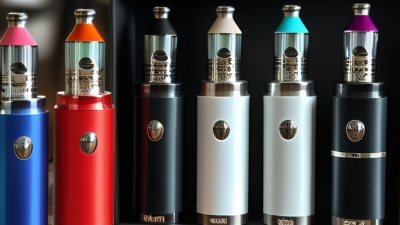
Sourcing vape products internationally requires more than comparing prices. Work only with products permitted in the destination market. Begin by checking the supplier’s registered business address, operating license, and export authorization. Ask for current laboratory reports, ingredient disclosures, safety data, and batch-level traceability. A serious supplier should explain where manufacturing occurs and how quality is monitored.
Use independent verification before placing a large order. Confirm certificates directly with the issuing laboratory, not only through scanned documents. Request product samples in sealed packaging, then inspect labels, lot codes, seals, and printed warnings. Check whether the proposed specifications match the sample. Small differences can reveal weak production controls. Video calls can help, but they do not replace a physical audit or trusted inspection company.
Distribution channels also need careful review. Prefer documented wholesalers, licensed importers, and established logistics providers with clear customs procedures. The contract should state delivery terms, inspection rights, refund conditions, and responsibility for regulatory changes. Avoid suppliers requesting unusual payment routes or refusing basic compliance questions. No checklist is perfect. I would still recheck certificates before each major shipment, because licenses and market rules can change. Keep invoices, test reports, shipping records, and communication logs together. This creates a practical evidence trail for customs reviews and internal quality checks.
| Sourcing Dimension | Recommended Verification Criteria | Documents or Evidence to Request | Suitable Distribution Channel | Key Risk Check |
|---|---|---|---|---|
| Supplier identity and legal status | Confirm that the supplier is a legally registered manufacturer, exporter, or authorized distributor in its operating jurisdiction. | Business registration, registered address, tax or customs identification, bank-account name matching the legal entity, and recent trade references. | Direct manufacturer supply, authorized wholesale distribution, or documented regional distribution. | Avoid suppliers requesting payment to unrelated personal accounts or refusing to provide verifiable corporate information. |
| Product authenticity and traceability | Use batch-level traceability and confirm that packaging, serial references, labeling, and product specifications remain consistent across samples and production orders. | Batch records, product photographs, serial-number procedure, certificates of analysis, production dates, and a written anti-counterfeit process. | Factory-direct purchasing or sealed wholesale cartons with documented chain of custody. | Reject mixed batches, altered packaging, missing lot information, or unusually low prices that cannot be commercially explained. |
| Destination-market compliance | Verify the specific rules of the destination country before placing an order; requirements differ for nicotine content, product notification, packaging, taxes, and advertising. | Market authorization or notification records where applicable, compliant labels, ingredient list, warnings, testing reports, and importer-of-record details. | Licensed local importer, regulated wholesaler, or customs-cleared business-to-business channel. | Do not rely on a supplier’s statement that a product is “globally compliant”; compliance is market-specific. |
| European Union requirements | For nicotine-containing products, check applicable Tobacco Products Directive requirements, including product notification, health warnings, packaging, emissions, and container limits. | EU market notification evidence, local-language labeling files, ingredient and emissions documentation, and confirmation of the responsible economic operator. | EU-based importer or distributor with established customs and product-compliance procedures. | The TPD generally limits nicotine liquid to 20 mg/mL, disposable or refillable tanks to 2 mL, and refill containers to 10 mL; national rules may add requirements. |
| United Kingdom requirements | Treat the United Kingdom as a separate regulatory market and verify notification, labeling, packaging, and responsible-person requirements before importation. | UK product notification record, compliant artwork, ingredient and emissions files, and details of the UK responsible party. | UK-registered importer, licensed wholesaler, or domestic fulfillment partner. | EU documentation alone may not establish UK compliance after the regulatory separation of the two markets. |
| United States requirements | Confirm whether the exact product is legally authorized for marketing by the relevant federal regulator and comply with state and local rules. | Authorization documentation, product listing information, laboratory reports, warning-label artwork, importer records, and state-specific registrations where required. | Domestic regulated distributor or importer with documented federal and state compliance controls. | A pending application, laboratory certificate, or supplier declaration is not the same as authorization to market. |
| Quality management and manufacturing controls | Assess incoming-material controls, assembly procedures, sanitation controls, change management, complaint handling, and product-release testing. | Quality manual, manufacturing flow chart, inspection records, corrective-action reports, audit results, and independent test reports. | Audited factory supply or distributor able to provide factory-level quality records. | An ISO 9001 certificate may support quality-system evaluation but does not by itself prove product-market compliance. |
| Nicotine liquid and ingredient controls | Confirm nicotine concentration, ingredient identity, contaminant limits, flavoring composition, and batch consistency using independent testing where appropriate. | Certificate of analysis for each batch, ingredient specifications, stability data, contaminant screening, and safety data sheets. | Controlled wholesale supply with batch-specific testing and documented storage conditions. | Check for inaccurate nicotine claims, undeclared ingredients, expired batches, and inconsistent test methods. |
| Battery and electrical safety | Verify cell specifications, protection features, charging behavior, short-circuit protection, overheating controls, and transport classification. | Battery test reports, safety data sheets, transport test summaries, charger specifications, and quality-control records. | Specialized freight forwarder or distributor experienced in lithium-battery shipments. | Do not ship lithium-battery products without checking applicable dangerous-goods, packaging, labeling, and carrier requirements. |
| International logistics and customs | Select a route that supports customs documentation, product classification, insurance, temperature control where needed, and delivery tracking. | Commercial invoice, packing list, certificate of origin, customs classification, transport declaration, insurance certificate, and tracking records. | Air or sea freight through a licensed logistics provider familiar with regulated consumer products. | Confirm duties, excise taxes, import permits, age-restricted delivery rules, and carrier acceptance before dispatch. |
| Packaging, labeling, and language | Ensure labels contain legally required warnings, nicotine information, ingredients, batch references, disposal information, and local-language content. | Final artwork, translation review, packaging specifications, warning-label approval, and barcode or traceability details. | Local-market distributor or fulfillment center capable of segregating compliant and non-compliant stock. | Do not use packaging designed for another market without confirming that all mandatory information remains compliant. |
| Age-restricted sales and marketing controls | Use age-verification procedures and restrict sales, advertising, and promotions according to destination-market law. | Age-verification workflow, reseller policy, advertising approval process, staff training records, and customer complaint procedure. | Licensed adult-only retail, compliant business-to-business wholesale, or controlled e-commerce fulfillment. | Avoid youth-oriented imagery, unverified health claims, and sales channels that cannot demonstrate adult-customer controls. |
| Commercial terms and supplier performance | Compare minimum order quantity, lead time, payment terms, warranty coverage, defect allowance, replacement policy, and capacity. | Pro forma invoice, technical specification sheet, supply agreement, inspection plan, warranty terms, and service-level commitments. | Framework contract with staged purchase orders and third-party pre-shipment inspection. | Begin with samples and a small pilot order before committing to volume purchases. |
| Ongoing monitoring and recall readiness | Maintain records that allow defective or non-compliant batches to be identified, isolated, recalled, and reported when required. | Recall plan, distribution records, complaint log, adverse-incident process, batch inventory report, and regulatory communication procedure. | Local distributor with warehousing, customer-support, and product-recall capabilities. | Review compliance status and product performance periodically; regulations and enforcement priorities can change. |
Compliance requirements vary by destination, product type, nicotine content, and sales channel. Confirm current rules with the relevant customs authority, regulator, and qualified local compliance adviser before importing or distributing products.
Sourcing flum vape products requires more than comparing wholesale prices. Product quality starts with traceable manufacturing records, not attractive packaging. Request the factory’s ISO 9001 certificate, production address, recent audit report, and batch-level certificates of analysis. Verify each document with the issuing laboratory or certification body. A clean PDF is not proof.
Battery safety deserves separate attention. The UN Manual of Tests and Criteria, Part III, Subsection 38.3, sets transport testing requirements for lithium batteries. Ask for test reports matching the exact battery model, not a similar sample. Check charging protection, leakage resistance, heating behavior, and labeling accuracy. For electrical safety, review testing against recognized standards such as UL 8139 where applicable. The 2024 Global State of Tobacco Harm Reduction report also shows that product availability and regulation differ widely across markets, making local compliance checks essential. Never assume one certificate covers every country.
Authenticity checks should continue after delivery. Compare serial numbers, carton markings, liquid color, device weight, and packaging seals against approved samples. Independent laboratories can test nicotine concentration, contaminants, and prohibited substances. Keep retained samples from every batch. Small differences matter. In practice, suppliers may pass one inspection and change components later. That risk is easy to underestimate. Use written specifications, random re-testing, and payment terms linked to verified quality milestones. Mistakes still happen, especially when documents look complete.
Sourcing Flum vape products from global suppliers requires more than comparing unit prices. Start by checking whether vaping devices, e-liquids, and nicotine products are legal in the destination market. Import rules may differ by region, state, or province. Confirm product registration, ingredient disclosure, packaging language, health warnings, and age-restricted sales requirements. Some authorities also require an importer license, tobacco permit, or local responsible representative. Requirements can change quickly.
Ask suppliers for test reports, batch records, manufacturing certificates, and clear product specifications. Verify nicotine concentration through an independent laboratory when possible. Do not rely only on a supplier’s online documents. Customs usually needs accurate invoices, packing lists, origin details, and correct HS codes. Taxes may include customs duty, excise duty, value-added tax, and brokerage fees. Calculate the landed cost before signing a purchase agreement. My early estimates often missed storage and inspection charges.
Tips: Confirm rules with the destination customs office and a qualified compliance adviser. Obtain written shipping approval from the carrier. Use plain, accurate descriptions, not vague wording. Check whether air freight restricts batteries or nicotine liquids. Choose insurance and tracking for commercial shipments. Keep every certificate and communication. A small documentation error can delay an entire pallet. Suppliers should also provide recall support and lot traceability. If regulations remain unclear, pause the order rather than assume permission.
Selected national VAT/GST rates relevant to landed-cost planning. Customs duties, excise taxes, licensing, and product-specific import restrictions are not included.
The United Kingdom, Germany, France, and Italy apply standard VAT rates of 20%, 19%, 20%, and 22%, respectively. Australia applies a 10% GST, while Canada’s federal GST is 5%; Canadian provincial sales taxes or HST may increase the final rate. Importers should verify the destination market’s licensing, nicotine-product rules, customs classification, excise taxes, and carrier restrictions before shipping.
Reference basis: official national tax-rate information published by government tax authorities; rates shown are standard national VAT/GST rates and may not represent the final landed cost.
When sourcing vape products from global suppliers, compare terms beyond the quoted unit price. Request the minimum order quantity, production lead time, payment schedule, and shipping term in writing. EXW may appear cheap, but it transfers transport and export responsibilities to the buyer. DDP can simplify delivery, yet it may hide unclear import obligations. Ask for current test reports, ingredient declarations, battery safety records, and batch traceability documents. Short sentences matter. So do clear records.
Supplier verification should combine documents with physical evidence. Order samples from different production batches and inspect seals, labels, charging performance, and packaging accuracy. A video factory tour helps, but it does not replace an independent audit. Check whether the supplier can legally sell the product in each destination market. Confirm age-related sales controls and applicable product standards before placing an order. A clean spreadsheet can still hide a weak supplier. I have learned that polished communication is not proof of manufacturing reliability.
The purchase agreement should define exact specifications, acceptable defect rates, inspection timing, delivery penalties, warranty handling, and refund conditions. Include rules for damaged batteries, incorrect labeling, product recalls, and unauthorized substitutions. State the governing law, dispute process, insurance duties, and agreed Incoterms. Link final payment to inspection approval when possible. Do not rely on chat promises. Every important promise belongs in the contract, even if the negotiation feels friendly. One uncomfortable review now may prevent an expensive dispute later.