WARNING: This product contains nicotine. Nicotine is an addictive chemical. Our products are restricted to adults 21+ only.

Leave Your Message

7 Best Disposable Vape Options for Global Buyers

Disposable Vape products are often compared by size, battery capacity, liquid volume, and flavor range. For global buyers, those specifications are only part of the picture. Product traceability, clear ingredient information, manufacturing quality, and local rules also matter. A compact device may look straightforward, yet its labeling can vary between markets.

Public-health data adds important context. The World Health Organization’s 2024 estimates put global e-cigarette use at about 100 million people, including roughly 86 million adults and 15 million adolescents aged 13–15, based on available data. These figures describe use, not safety or endorsement. The U.S. Centers for Disease Control and Prevention notes that e-cigarette aerosol is not harmless and may contain harmful substances. Nicotine can also cause dependence. The evidence deserves careful reading.

This guide to seven options is therefore framed around transparent specifications and responsible evaluation, not promises of safety. Buyers should verify who made a device, whether its contents and battery details are disclosed, and whether its sale is permitted where it will be supplied. Market research can describe sales and demand, but sales figures cannot prove a product is safe. Not a neat market. Reporting and standards differ, and some product claims may be difficult to verify independently. That uncertainty is worth stating plainly.
7 Best Disposable Vape Options for Global Buyers

Understanding Disposable Vapes: Design, Capacity, and Nicotine Content

7 Best Disposable Vape Options for Global Buyers

Understanding Disposable Vapes: Design, Capacity, and Nicotine Content

Disposable vapes are compact devices with a built-in battery, liquid reservoir, and mouthpiece. Their shape affects pocket comfort, grip, and how easily the device can be stored. Capacity describes the amount of liquid inside, but it does not guarantee a specific number of uses. Puff counts are estimates; inhalation length and frequency can change them. Small details matter.

Nicotine content may be listed as a concentration or amount per volume. Read the label carefully, since formats can differ. Nicotine can cause dependence, and vaping is not risk-free. A product’s appearance or flavor does not indicate its contents. Packaging can also be hard to interpret, so unclear information is a reason to pause. Buyers should check current local requirements before purchasing or carrying any device.


Criteria for Comparing Disposable Vape Options

Comparing disposable vape options should begin with safety and transparent product information, not flavor claims. Check whether packaging lists ingredients, nicotine content, batch details, and a clear manufacturer contact. Independent testing can offer useful evidence, though a logo alone proves little. Look for reports tied to the exact product and batch. No report? Treat that gap seriously.

Build quality matters, too. Inspect the sealed packaging, mouthpiece, and device body for damage or signs of leakage. Clear instructions and consistent labeling make basic checks easier. Battery and disposal information should be easy to find. These devices contain electronic components, so ordinary household bins may not be suitable; follow local collection guidance. Small detail. Important.

Rules and age requirements differ by location, and product availability does not prove local compliance. Verify current requirements with official sources before considering any option. Nicotine can cause dependence, and vaping is not risk-free. People who do not use nicotine should not start. Comparisons also have limits: packaging and online descriptions cannot confirm what is inside. That uncertainty is easy to overlook.

Seven Disposable Vape Types for Adult Buyers Worldwide

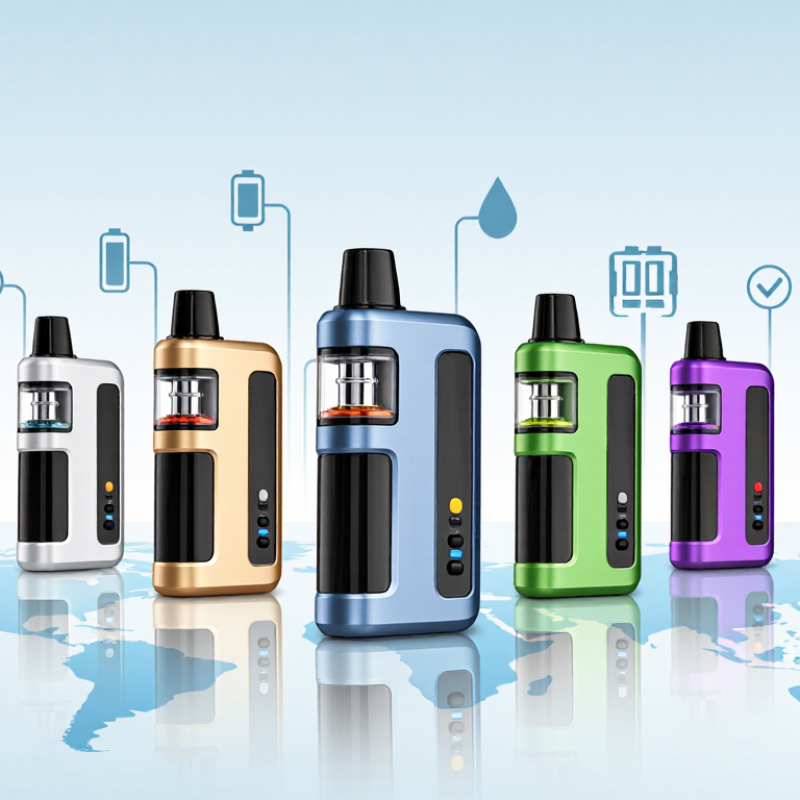
Disposable vape options differ more by design than appearance. Compact fixed-capacity devices are lightweight and simple. Rechargeable disposables add a charging port but remain single-use products. Draw-activated models respond when users inhale; button-activated models require a press. Mesh-coil versions aim for more even heating. Adjustable-airflow designs let users change the draw. Some products are labeled nicotine-free, but that claim deserves careful checking. These seven types can overlap, so compare the actual specifications rather than relying on category names.

A useful buying decision starts with clear labeling, sealed packaging, and readable ingredient information. Battery size, liquid volume, and puff estimates vary, and advertised puff counts are not guarantees. Nicotine can cause dependence, and vaping is not risk-free. A sleek device is not automatically a safer one. Global buyers should check local rules before purchasing, since product standards and restrictions differ by location. I would not treat online descriptions as independent proof; that assumption is easy to make and worth questioning.

Tips: Check the label. Confirm nicotine content and charging details. Avoid damaged packaging or vague claims. Keep devices away from children and pets, and follow local disposal guidance for batteries and electronic waste.

How Local Regulations Affect Product Availability and Import

For global buyers, a disposable vape’s availability depends on local rules, not just seller listings. Some markets restrict nicotine strength, flavors, device capacity, or product types. Others require specific labels, product registration, or safety documentation. Rules can change, and requirements may differ between regions within one country. Check current guidance from local regulators and customs before ordering. An online listing is not proof that a product can be imported.

Import decisions also affect practical options. Customs duties, shipping restrictions, and age-verification requirements may influence cost or delivery. Compare products only after confirming they meet local requirements. Review packaging details, nicotine information, and manufacturer documentation carefully. If these are missing or unclear, pause and ask the seller or regulator. Small details matter. I once overlooked a label requirement; it was an easy mistake, but a useful reminder to verify claims.

Tips: Check official government sources before purchase, and confirm rules with a licensed local retailer when possible. Keep order and product documents. Avoid assuming that rules in a neighboring country apply to yours. Regulations can be confusing. When information conflicts, seek clarification before importing.

Authenticity, Battery Safety, and Responsible Disposal Considerations

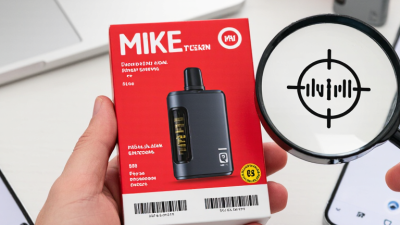
For global buyers comparing disposable vape options, authenticity starts with traceability, not polished packaging. Check for an intact seal, a readable batch code, clear battery information, and a manufacturer contact that can be verified. Missing details are a warning sign, though packaging alone cannot prove authenticity. A cautious buyer should also look for credible, independently documented safety testing against applicable standards. That takes effort.

Battery condition matters after purchase. Avoid using a device that is unusually hot, swollen, leaking, or physically damaged. Keep it away from direct sun, heaters, and crushing pressure; never pierce or dismantle it. Follow the device instructions, especially if it has a charging port. I would not assume that a familiar shape means a familiar battery design.

Disposal deserves equal attention. The Global E-waste Monitor 2024, produced by UNITAR and the International Telecommunication Union, reports that 62 million tonnes of electronic waste were generated worldwide in 2022; only 22.3% was documented as formally collected and recycled. Those figures cover all e-waste, not disposable vapes specifically, but they show why a tiny device should not automatically go in household rubbish. Its battery and residual materials need appropriate handling. Ask a local waste authority or retailer about battery and small-electronics collection, and keep used devices away from children until drop-off. Small device, real waste.

7 Best Disposable Vape Options for Global Buyers - Authenticity, Battery Safety, and Responsible Disposal Considerations

These are buyer-selection profiles, not rankings of verified products. Laws and product requirements vary by country. Nicotine products are addictive; follow local age restrictions and regulations.

Selection Profile What to Check Authenticity Considerations Battery and Disposal Notes
1. Locally authorized product Confirm that the product type, nicotine content, packaging, and sale are permitted in the destination market. Prefer a licensed local seller. Check required health warnings and importer or manufacturer details where local rules require them. Follow local battery and electronic-waste collection rules; do not assume ordinary household waste is appropriate.
2. Clearly traceable, sealed unit Look for intact packaging, legible labeling, and batch or lot information when provided. If a verification code is provided, check it through an official channel. A code or intact seal alone does not prove authenticity. Do not use a device with visible damage, leakage, unusual heat, or signs of tampering.
3. Product with clear battery instructions Check that the package or accompanying instructions identify safe handling, storage, and charging guidance, if applicable. Treat missing, contradictory, or poorly translated safety information as a reason to seek clarification or avoid the product. Keep lithium-battery devices away from excessive heat and water. Stop using a device that becomes unusually hot, swells, or is damaged.
4. Rechargeable single-use device Check whether the device is explicitly designed to be recharged and whether its instructions specify compatible charging equipment. Avoid improvised charging or products with unclear charging specifications. Use only the charging method specified by the manufacturer; do not leave a charging device unattended. Rechargeability does not remove the need for proper disposal.
5. Clearly labeled nicotine-content option Check the stated nicotine concentration and unit on the label, and compare it with local limits and labeling requirements. Be cautious if nicotine information is missing, inconsistent across the package, or difficult to read. Nicotine-containing liquid and devices require careful handling and disposal according to local guidance; keep them away from children and pets.
6. Explicitly labeled nicotine-free option Look for a clear “0 mg/mL” or equivalent nicotine statement, where such labeling is permitted and required. A label is not independent proof of contents; rely on applicable local oversight and credible testing information where available. Nicotine-free does not mean risk-free. The device still contains electronic components and may contain a lithium battery.
7. Product with a responsible take-back route Before purchase, check whether a local retailer, municipal program, or authorized facility accepts used vaping devices or small batteries. Confirm the collection program is legitimate and accepts this specific type of device; acceptance rules differ by location. Do not burn, crush, or dismantle the device. Use local battery or e-waste guidance, especially for damaged batteries.